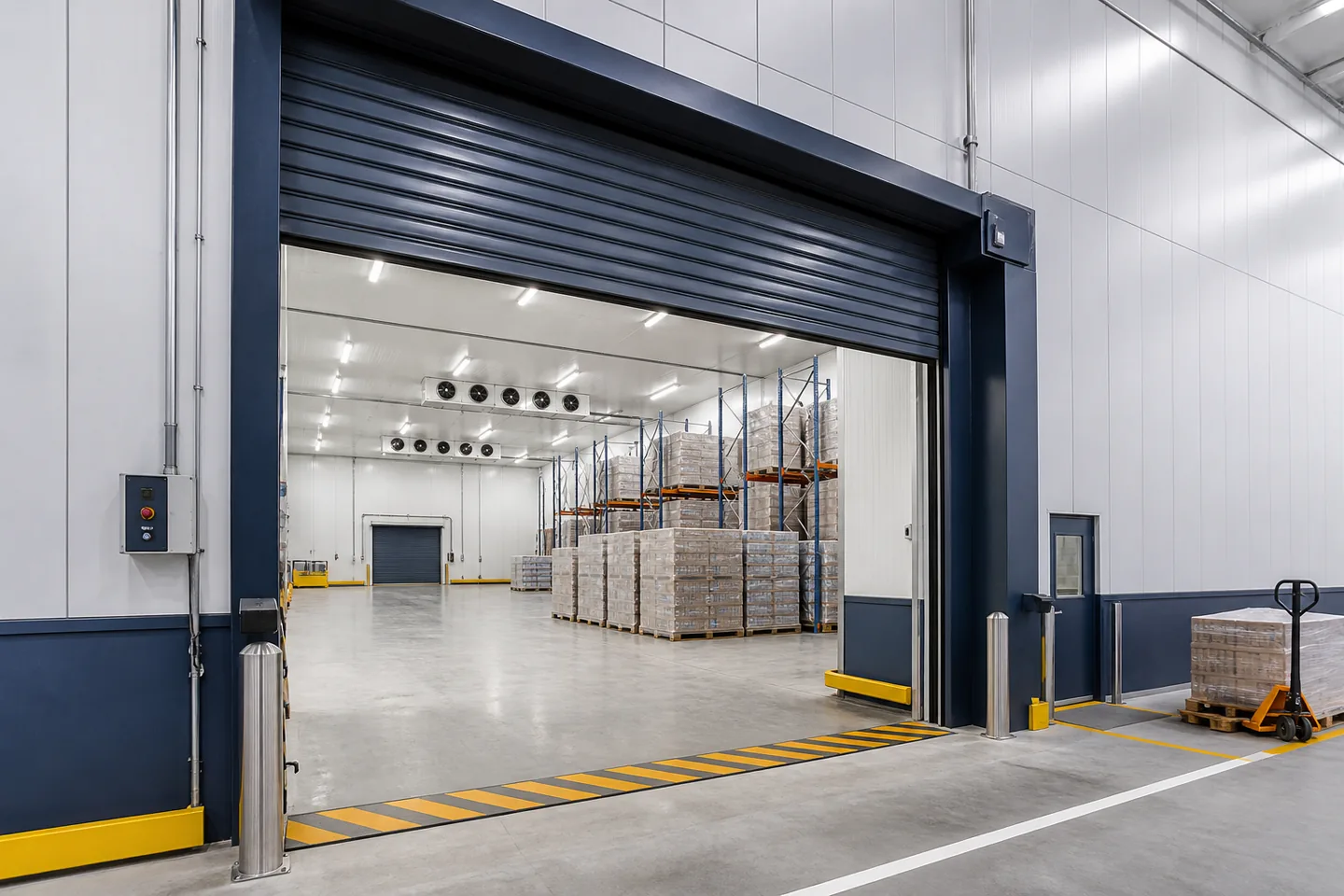
An automatic rolling shutter can serve a retail frontage, service entrance, factory bay, storeroom, or warehouse opening, but these applications do not place the same demands on the system. The correct solution begins with the opening and operating pattern. Selecting a shutter from width alone can overlook weight, wind exposure, traffic, duty, structural support, controls, and future maintenance.
Define what the shutter is expected to do
A shop may operate its shutter only when opening and closing for the day. A warehouse may use an entrance repeatedly for deliveries. A factory shutter may separate work areas or serve a large external bay exposed to dust and rain. Record the intended purpose, normal operating frequency, peak periods, type of people or vehicles passing through, and how long the opening is usually kept open.
If temperature separation, rapid cycling, fire performance, wind resistance, or another specialist function is required, state it clearly at the beginning. A standard motorised rolling shutter should not be assumed to provide a specialist rating or performance that has not been selected and documented.
Measure the opening and installation space
The survey should record clear width and height, headroom for the barrel and curtain roll, side room for guide channels and drive components, wall construction, lintel condition, floor level, drainage, ceiling services, and nearby obstructions. Large shutters place loads on their supports, so the surrounding structure and fixing method need proper review.
Vehicle paths, ramps, docks, bollards, shelving, signage, sprinklers, cable trays, and lighting may conflict with the shutter or service access. The design should provide safe access to the motor, barrel, controls, and relevant components without requiring finished work to be dismantled unnecessarily.
Coordinate the curtain, guides, barrel, and motor
The curtain profile and material influence shutter weight, rigidity, appearance, ventilation, and suitability for the opening. Guide channels control the curtain as it moves. The barrel supports and rolls the curtain, while the drive supplies the required movement. These parts should be selected as a system.
Motor selection depends on more than opening size. Curtain weight, barrel arrangement, expected cycles, balance, environmental exposure, power supply, and the required operating method all matter. An oversized or undersized component is not a substitute for correct design and commissioning.
Select practical controls
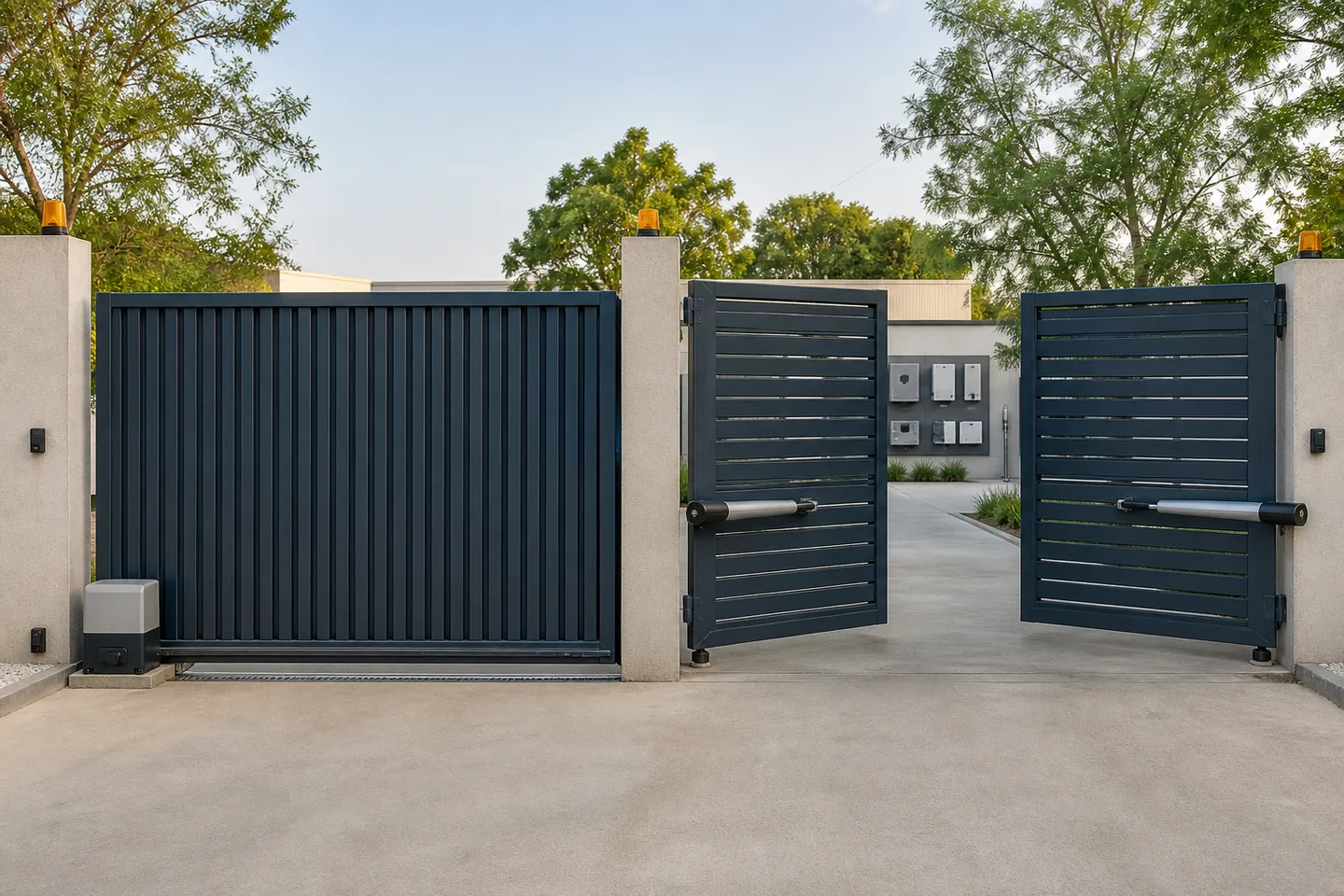
Control options may include a push-button station, key switch, remote control, access-control input, reception command, or another compatible device. The choice should reflect who is authorised to operate the shutter and whether the operator can clearly see the opening. A remote command from a location without visibility may require additional controls or detection based on the project risk assessment.
The positions of switches and emergency or manual controls should be planned before cabling and wall finishes are complete. Staff should be trained to stop operation if the path is obstructed and should not allow unauthorised people to play with the controls.
Address the moving area and safety
A rolling shutter is a large moving assembly. The area beneath and around it must remain clear during operation. Depending on the configuration and assessment, the system may use monitored edges, photocells, warning devices, hold-to-run control, guarded components, or other protective measures. Suitable measures vary by site and should be confirmed during design and commissioning.
Do not treat a shutter as a lifting device, support items from the curtain, walk beneath a visibly damaged shutter, or attempt to force a jammed curtain. Forklift impacts, bent guides, displaced slats, and objects caught at floor level should be reported before further operation.
Establish inspection and maintenance routines
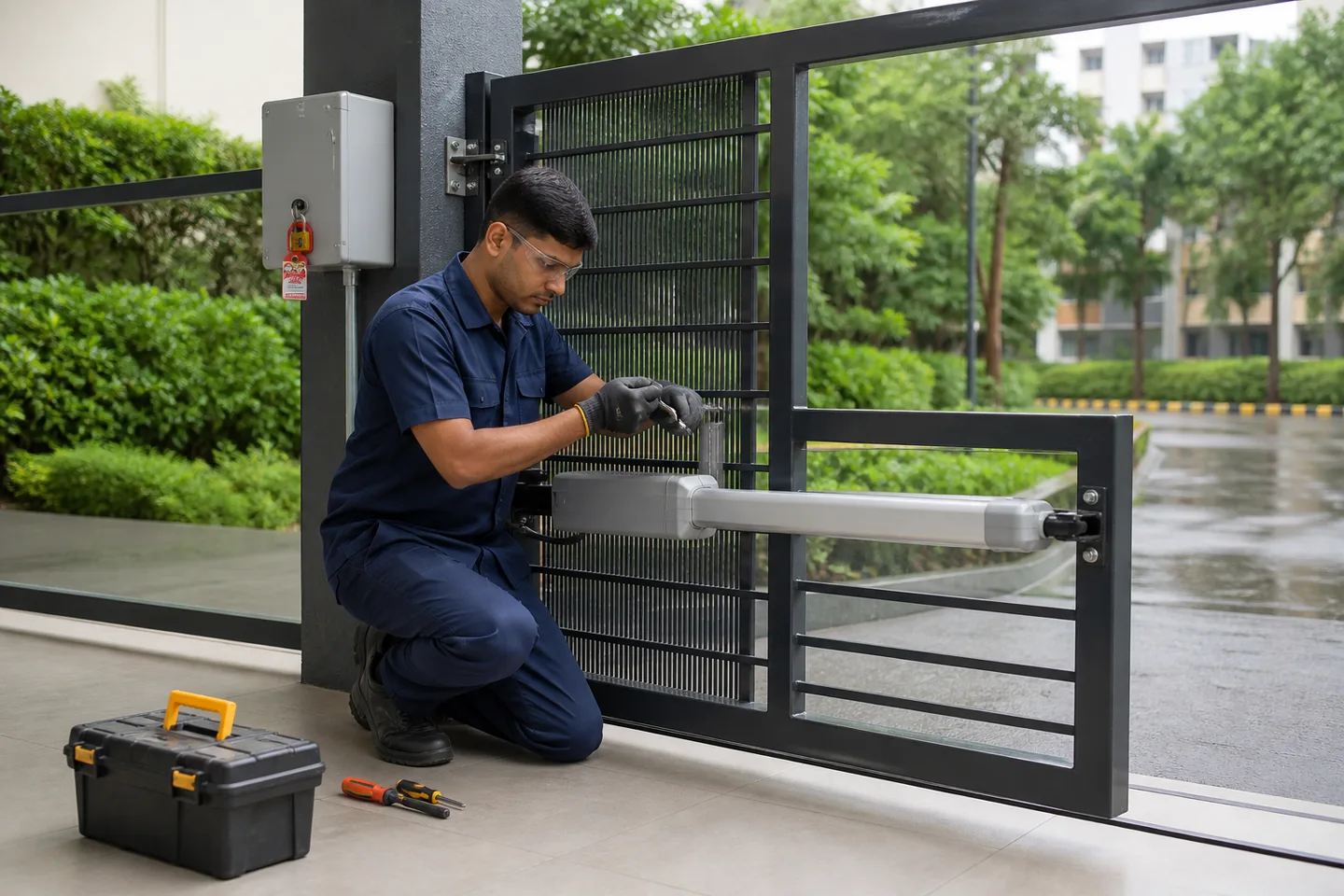
Facility teams can keep the operating area clean, observe the curtain and guides, and report changes in sound, speed, alignment, stopping position, or control response. They should not adjust springs, open electrical enclosures, dismantle drive components, or bypass protective devices.
A professional visit can inspect the curtain, guides, barrel, drive, supports, fasteners, controls, cabling, limits, balance where applicable, and protective functions included in the system. Maintenance frequency should reflect usage, environment, condition, and manufacturer guidance rather than a single interval for every shutter.
When requesting a proposal, share the opening dimensions, photographs, location, purpose, estimated daily operation, vehicle details, exposure, power availability, desired controls, and any specialist requirements. The Elite Automatic Doors can then conduct a site review and recommend an arrangement suited to the specific shop, factory, or warehouse.
Every opening, traffic pattern, and control requirement is different. Share your site details so our team can assess the practical options.
Discuss your requirement →