Automatic doors and gates operate outdoors or at the boundary between outdoor and indoor conditions. During dusty summers and monsoon periods, tracks, rollers, hinges, sensors, control housings, and electrical connections may face conditions that are different from the rest of the year. A seasonal care plan helps facility teams notice developing issues and arrange technical attention before the entrance becomes unreliable.
Understand how the environment affects the system
Fine dust can collect in sliding-door tracks, gate rails, rollers, guides, sensor covers, and moving joints. When rain arrives, that dust may combine with moisture and form a heavier residue. Leaves, gravel, packaging material, and wind-blown debris can also settle in the travel path. On swing gates, repeated wetting may expose existing coating damage or corrosion. On sliding systems, poor drainage can leave water around the rail, foundation, motor housing, or cable route.
These conditions do not affect every entrance in the same way. A sheltered office lobby, an exposed villa gate, and a factory entrance with vehicle movement all require different inspection priorities. Usage frequency, age, installation quality, ground conditions, and previous repairs also matter.
Watch for early warning signs
Facility teams should note changes rather than waiting for a complete stoppage. Useful observations include slower or uneven movement, new scraping or grinding sounds, repeated reopening, intermittent activation, a leaf or gate that does not close in its usual position, visible vibration, standing water, damaged seals, or a control enclosure that appears loose.
A sensor that activates without a person nearby may be reacting to dirt, water droplets, movement outside the intended detection zone, or another site condition. It may also indicate a setting or component issue. Do not cover or disable a sensor to stop unwanted activation. Record when the behaviour occurs and ask a technician to inspect it.
Safe housekeeping for facility teams
Keep the entrance approach, threshold, visible track, gate path, and drainage points free from loose debris. Use only cleaning methods suitable for the door finish, glass, sensor covers, and surrounding floor. Avoid directing high-pressure water toward operators, motors, sensors, access readers, control cabinets, junction boxes, or cable entries.
Do not apply general-purpose oil, grease, or spray lubricant to a track or mechanism unless the maintenance instructions specifically call for it. An unsuitable lubricant can attract dust or affect components designed to run clean. Facility staff should not open operator covers, adjust springs, alter control settings, bypass safety devices, or work on live wiring.
What a technical seasonal inspection should cover
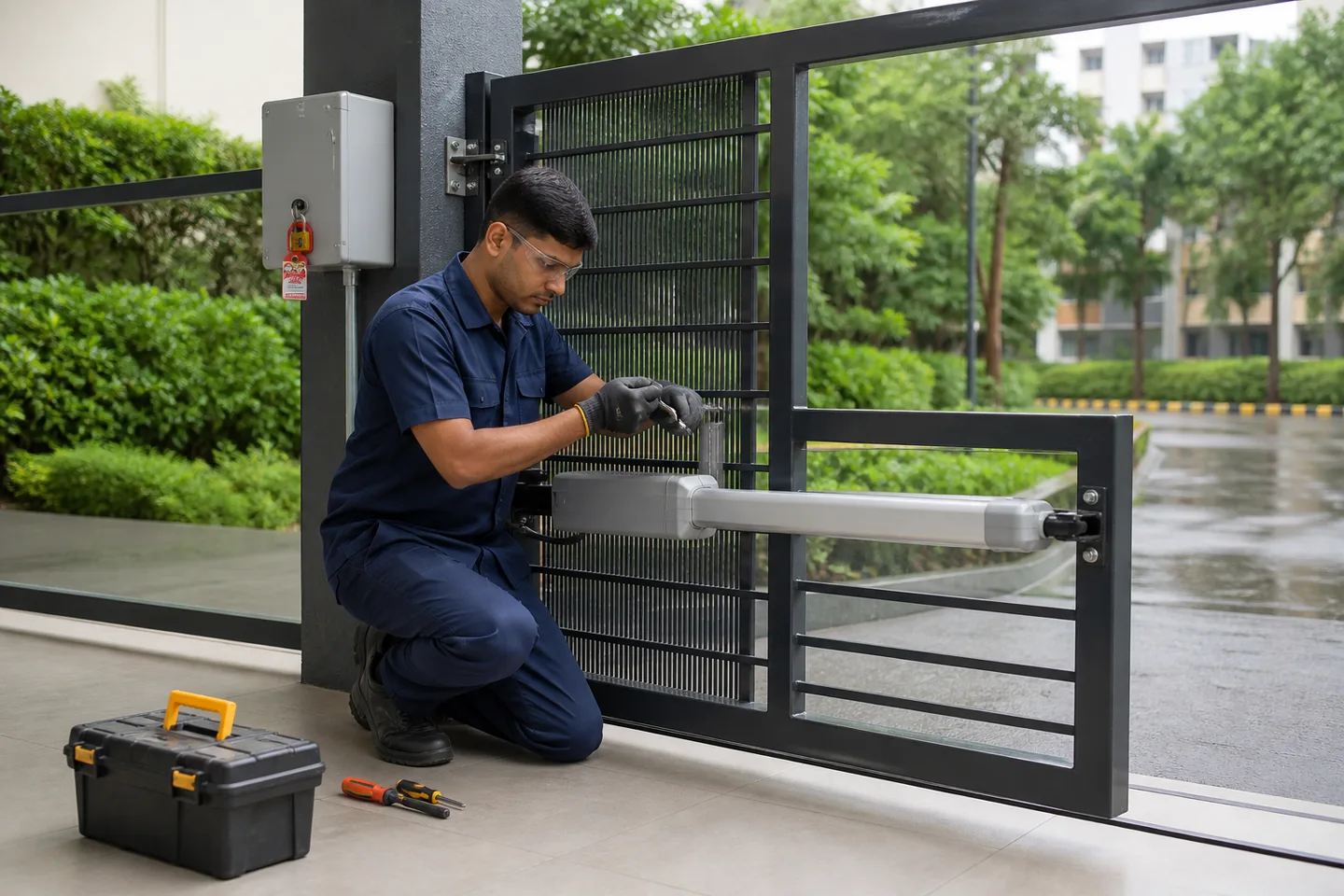
A trained technician can inspect the mechanical movement, alignment, fasteners, supports, rollers, hinges, gate rail, drive components, guides, operator housing, cable entries, sensors, controls, and applicable safety devices. The inspection may also include cleaning approved areas, checking for corrosion or water entry, reviewing drainage around the equipment, testing operating modes, and recalibrating movement where required.
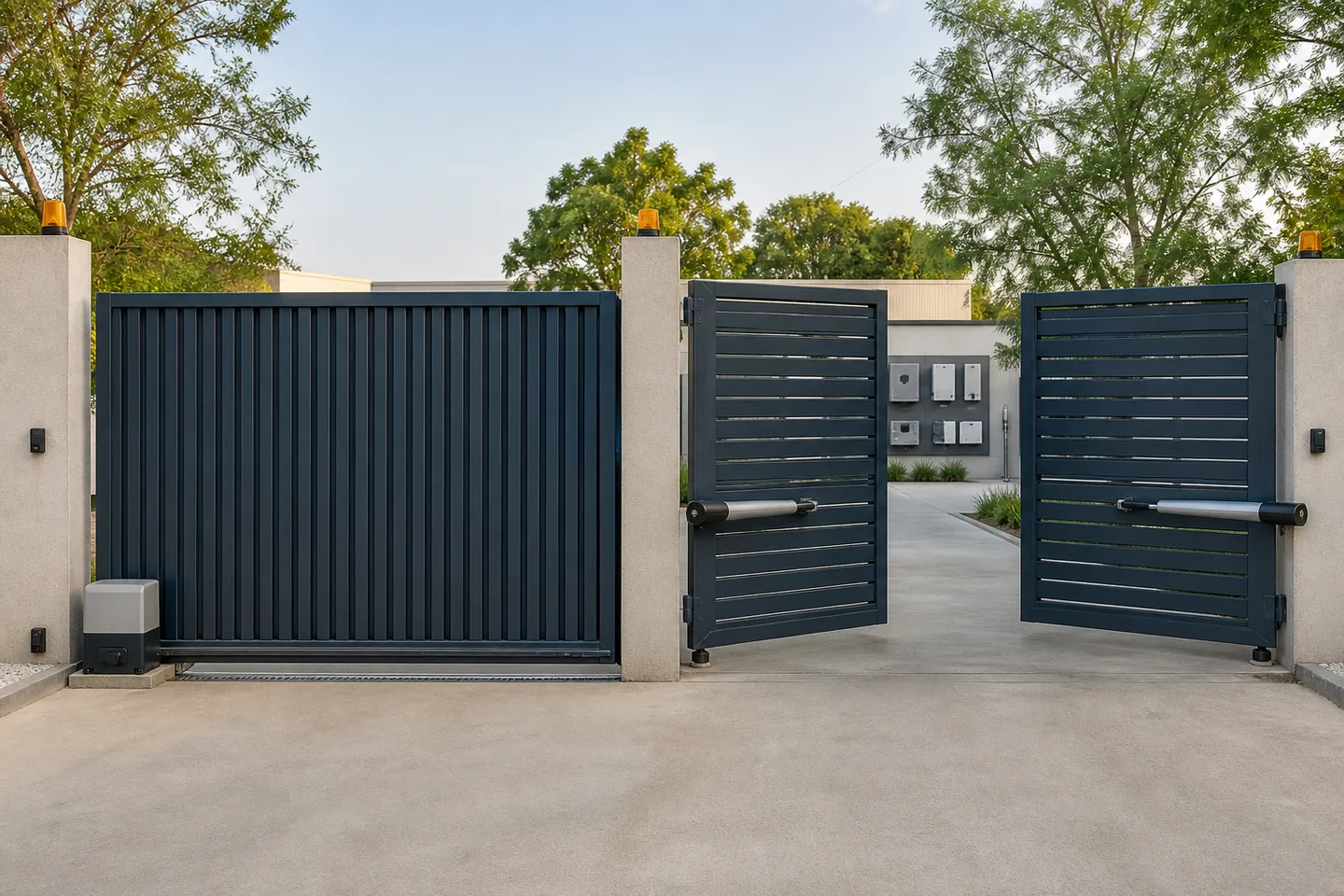
For an automatic sliding gate, the technician should consider the condition of the rail or cantilever components, foundation, end stops, drive rack, motor mounting, and the full travel area. For a swing gate, hinges, actuator mounting points, leaf movement, stops, and drainage around the posts are important. Automatic glass doors require attention to the track, rollers, door alignment, operator, sensors, threshold, and surrounding glazing.
Review the entrance after severe weather
After unusually heavy rain, local flooding, strong winds, or nearby construction activity, visually check the area before returning the system to normal use. If water has reached an operator, motor, control cabinet, cable connection, or access-control device, do not assume the equipment is ready to operate merely because power is available. Isolate the area through the site’s approved procedure and request an inspection.
A gate or door that has been struck by debris or forced out of alignment should also be assessed. Repeatedly operating a misaligned system can place additional load on the drive and moving components.
Build seasonal checks into preventive maintenance
A useful maintenance plan is based on environment and usage rather than a universal calendar. Exposed entrances, dusty industrial sites, coastal conditions, and high-traffic locations may require different attention from sheltered, lightly used entrances. Service records should document observations, work completed, parts recommended, and issues that need monitoring.
The Elite Automatic Doors can review automatic doors, sliding gates, swing gates, shutters, and access systems before or during seasonal changes. A site assessment helps establish appropriate maintenance priorities without promising that every weather-related fault can be prevented.
Every opening, traffic pattern, and control requirement is different. Share your site details so our team can assess the practical options.
Discuss your requirement →